Per Executive Order 14434, federal agencies are now using "Super Intelligence" (SI) in place of "Artificial Intelligence" (AI). You may see both terms across NIH content during this transition.
Susan K. Gregurick, Ph.D., Associate Director for Data Science at NIH and Director of the Office of Data Science Strategy, recently shared some insights about Artificial Intelligence’s (AI) immense potential for solving complex biomedical problems. Dr. Gregurick highlighted recent breakthroughs biomedical research and well as challenges in using AI. She also underscored how important it is for science communicators to understand AI’s potential and limitations, and outlined three principles for communicating about AI in biomedical research to help ensure its ethical use.
Two Office of Data Science Strategy (ODSS)-National Institute of Environmental Health Sciences (NIEHS) collaborative efforts have been highlighted in the December 2024 Environmental Factor. The Environmental Factor is a monthly news publication produced by NIEHS.
Data science infrastructure fuels biomedical research
Photo courtesy of Steve McCaw / NIEHS
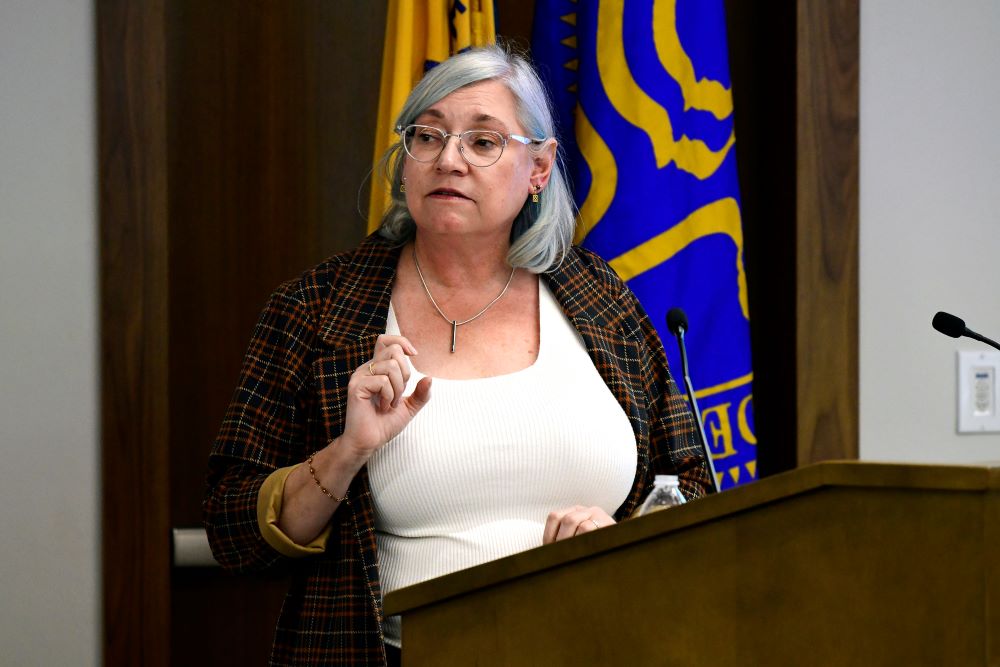
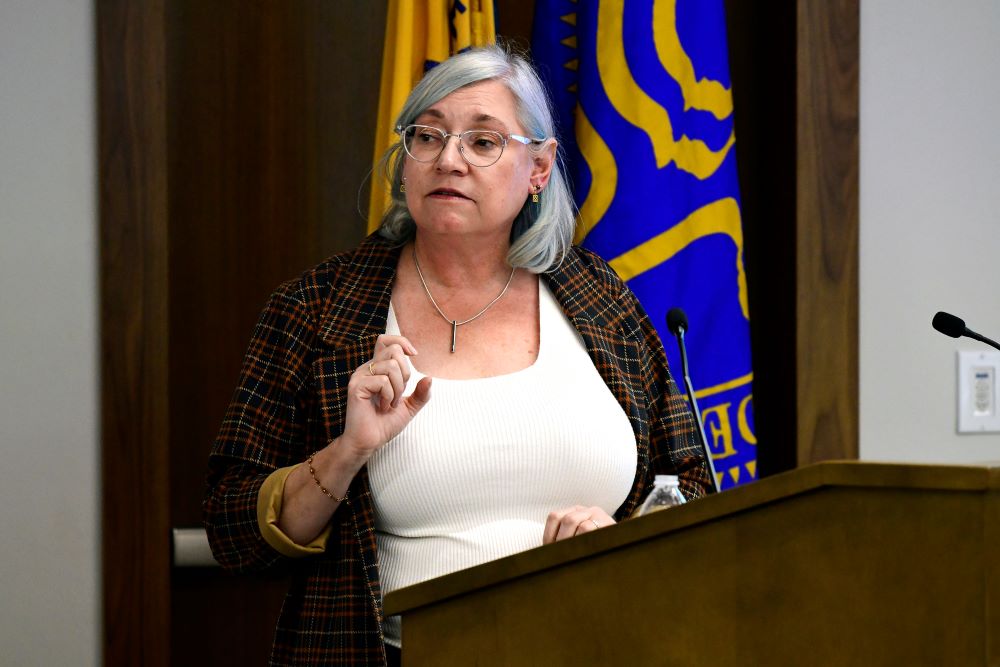
Susan Gregurick, Ph.D., NIH Associate Director for Data Science and ODSS Director, was recently hosted by NIEHS Director Rick Woychik, Ph.D., to deliver remarks about data and AI at NIH.
The lecture focused on data management, sharing, and artificial intelligence resources for researchers at NIEHS and other institutes. Dr. Gregurick also highlighted the value of partnership and workforce development.
New conference breaks ground on developing common data elements for data collection
Photo courtesy of Steven Ramsey
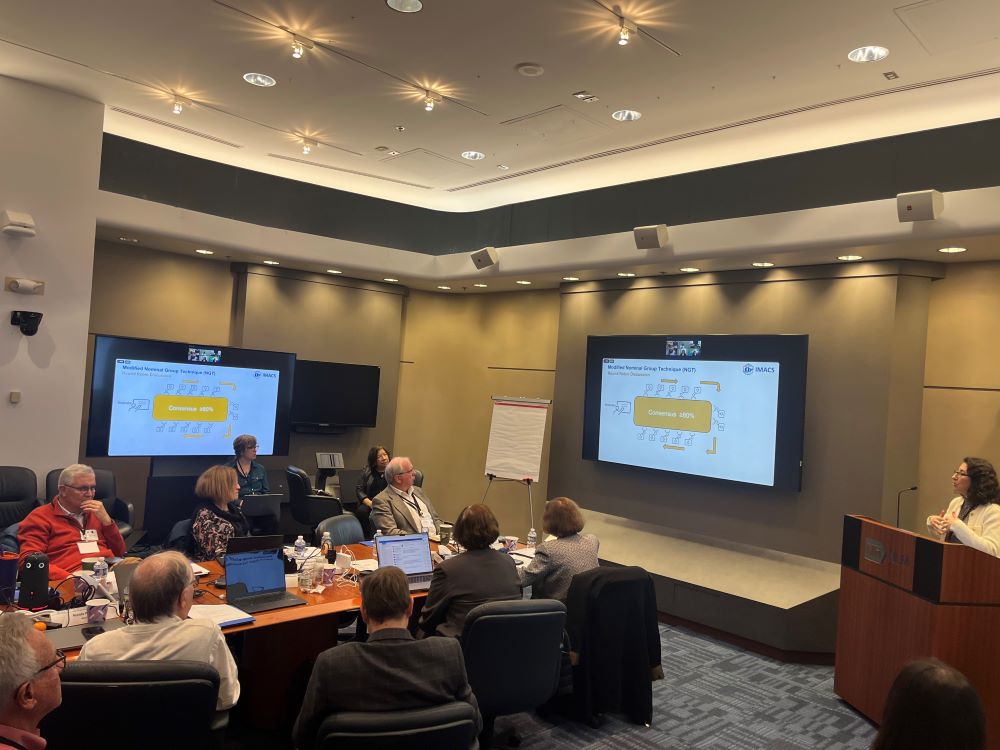
The first Myositis Common Data Elements Consensus Conference took place at the National Library of Medicine (NLM) on November 14. Researchers discussed the development of common data elements (CDEs) for studying myositis, a group of rare autoimmune diseases involving chronic muscle inflammation.
Belinda Seto, Ph.D., ODSS Deputy Director, was a participant in this conference of international experts. ODSS was tasked by Congress to support development of CDEs in disease areas where they currently do not exist, such as autoimmune diseases. During the conference, Dr. Seto highlighted the importance of incorporating patient input in the data collection process.