


Friday, May 1, 2026
In 2024, ODSS partnered with the Federation of American Societies for Experimental Biology (FASEB) to launch the third annual DataWorks! Prize to highlight examples of innovative data reuse.
This year, 82 teams registered for the challenge to demonstrate their accomplishments. The 311 team members came from a wide variety of disciplines, including biochemistry, clinical research, genomics, immunology, molecular biology, neuroscience, and more. The grand prize and distinguished achievement awards were selected from 10 finalists.
Representatives from the grand prize-winning team will have the opportunity to share at an NIH forum.
Grand Prize $100,000
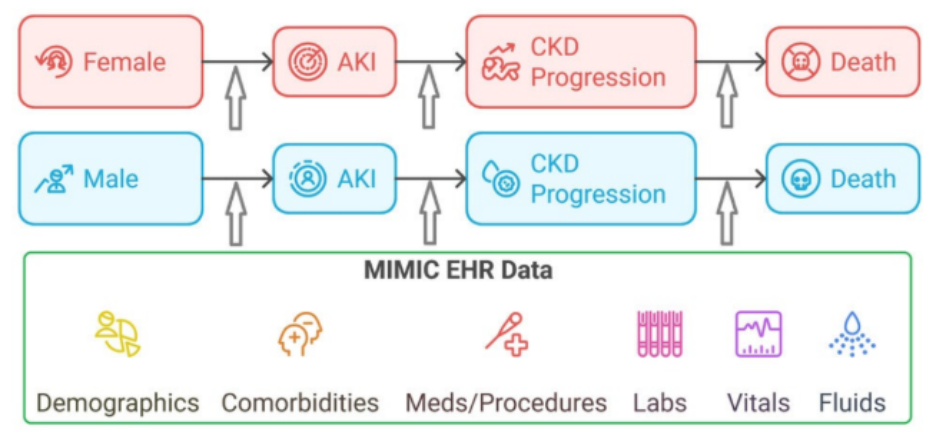
Divergent Equilibria
Sex Differences in Acute Kidney Injury Risk
Divergent Equilibria investigates sex differences in Acute Kidney Injury and its progression to Chronic Kidney Disease.
Distinguished Achievement Awards $75,000
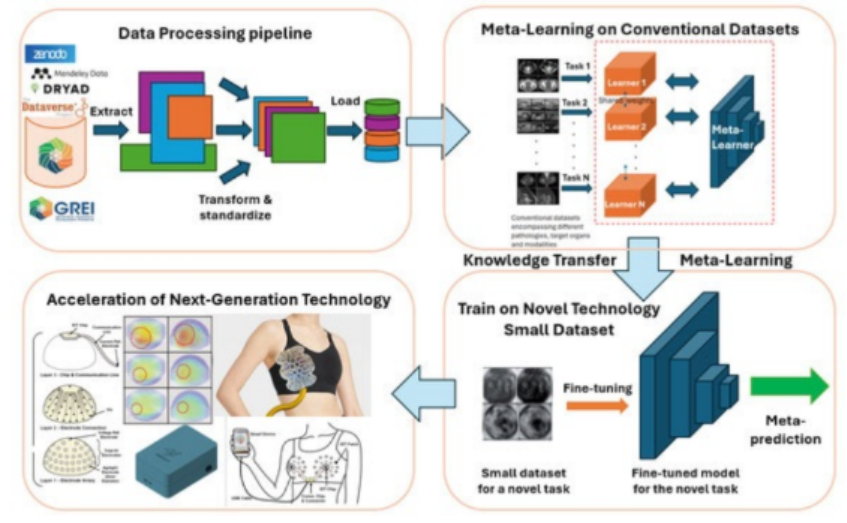
EarlyByrd Medical
MEGATRON Meta-Learning for Technology Acceleration
EarlyByrd is a medical device startup that is seeking to design, implement and evaluat a meta-learning model trained on medical imaging data and tested on limited Electrical Impedance Tomography (EIT) data to validate the deployment on EIT diagnostic tools.
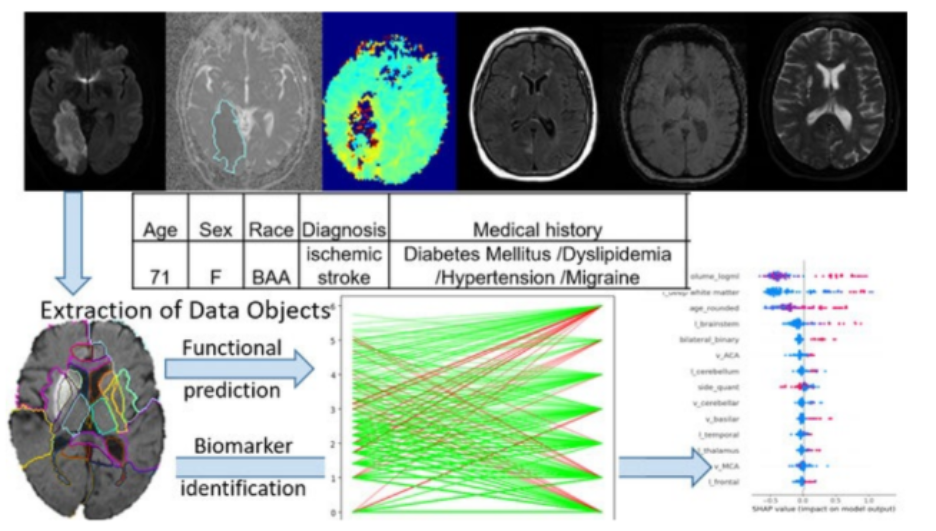
Andreia Vaconcellos Faria's team
Functional Stroke Prediction Through Open Science
Andreia Vaconcellos Faria’s team aims to develop models to predict functional domains that can be used in assessing the clinical impact of acute ischemic strokes.